
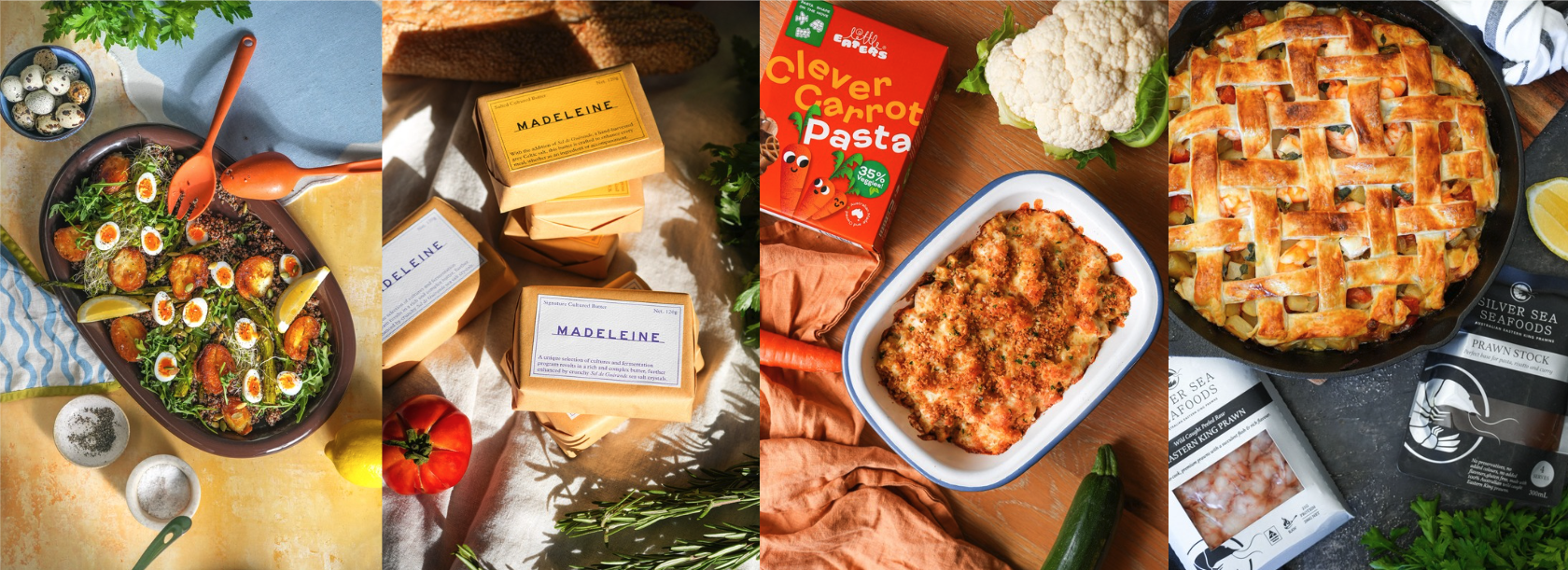
Between recipe development, photography, video and running socials for food and beverage brands, we see what's being cooked, what's being shared and what's actually selling. So here are our predictions for 2027 right from the kitchen bench.
1. Provenance gets personal
"Australian made" isn't a point of difference any more. It's the entry ticket. In 2027 shoppers want the next layer down: the region, the farm, the person. The brands we see cutting through aren't telling people where they're from, they're showing them. The grower's hands, the paddock in winter, the reason this year's harvest tastes different from last.
Our prediction: the farmer becomes the face of the brand and the pack shot takes a back seat to the place.
What to do: get out of the office at least once a season. One day on farm can feed months of content and it's the one thing a competitor can't copy.
2. The by-product becomes the product
Some of the most interesting conversations we've had this year started with a producer saying "we've got all this stuff left over". Pomace, pulp, seed meal, trim, seconds. Plenty of Australian producers are sitting on a second product line and still treating it as waste.
Our prediction: 2027 is the year more of those side streams get a name, a pack and a place on shelf. Upcycling stops being a sustainability footnote and becomes a genuine growth strategy.
What to do: lead with flavour, not virtue. Nobody buys a cracker because it saved something from landfill. They buy it because it's delicious, then feel good about buying it again. The recipe development has to come first.
3. The recipe is the ad
A beautifully lit pack shot gets scrolled past. A 20-second clip of that same product going into something people actually want for dinner tonight gets saved, shared and bought. Shoppers don't want to be told what a product is. They want to be shown what to do with it.
Our prediction: more brands shift budget from product-led creative to recipe-led creative, and the ones with a deep library of useful, properly tested recipes win the year.
What to do: build a recipe bank, not a campaign. Every recipe is a reel, a carousel, a blog post, an email, a retailer asset and a search result. One shoot day done properly should do the work of five.
4. Two speeds of content
Here's the tension we navigate on almost every brief. Social rewards content that feels real: handheld, a little messy, someone's actual kitchen. Packaging, ads and retail need polish. Brands that try to make one style do both jobs end up with content that's too slick for the feed and not sharp enough for the shelf.
Our prediction: the smartest brands plan for both from day one, capturing a polished hero suite and a looser behind-the-scenes layer on the same shoot.
What to do: brief every shoot with both outputs in mind. It costs very little extra on the day and saves you a second shoot later.
5. The new Australian pantry
Open a Melbourne pantry and you'll find chilli crisp, Kewpie, gochujang, za'atar and furikake sitting next to the Vegemite. These aren't specialty ingredients any more, they're weeknight staples.
Our prediction: the biggest wins won't come from the next import, but from Australian brands joining the crossover. Local cheese in a Japanese-style toastie. Native pepperberry in a chilli oil. Australian lamb with a gochujang glaze.
What to do: find the overlap between your product and what people are already cooking. That's where recipe content gets traction fastest.
6. Bitter, sour and a little bit funky
The Australian palate is growing up, and summer makes it obvious. Non-alc aperitifs, radicchio salads, ferments, sour everything. Sweet isn't the default reward any more.
Our prediction: bitter and fermented flavours move from restaurant menus into mainstream grocery, helped along by people drinking less and paying more attention to gut health.
What to do: teach, don't announce. Bitter needs context (citrus, fat, salt, a touch of sweetness). Show people how to make a bold flavour delicious at home and you'll earn more trust than any trend post.
7. Short labels, straight talk
Shoppers are flipping packs more than ever, and the ultra-processed food conversation is only getting louder. A long, unpronounceable ingredient list is now a marketing problem, not just a nutrition one. Shoppers are also far less forgiving of big health promises.
Our prediction: honesty becomes the premium. Short lists, plain language and claims you can back up.
What to do: if your list is short, put it front and centre. If you're making a claim, run it past someone who knows the Food Standards Code before it goes anywhere near a caption.
8. Beans get their glow-up
Australia grows a serious volume of chickpeas, lentils, faba beans and lupins and much of it heads overseas. Meanwhile, plenty of households are looking for protein that doesn't blow the grocery budget. That's a gap waiting to be filled.
Our prediction: Australian-grown pulses move out of the health food aisle and into the centre of the dinner plate.
What to do: fix the image problem visually. Beans still read as worthy and beige to a lot of people. Golden, crispy, glossy and brothy is how you change that, and it's photography and video that do the heavy lifting.
9. Content becomes part of the sales pitch
This is the one most brands miss. When a buyer, distributor or stockist is weighing up a new product, they want to know what marketing support comes with it. Brands that arrive with a library of recipes, imagery and ready-to-post assets are simply easier to say yes to.
Our prediction: content stops being only a consumer play and becomes a trade tool, especially for small and emerging brands chasing their first big ranging.
What to do: create assets your retail partners can use, not just your own channels. Recipe cards, shelf wobblers, in-store screens and content for their socials.
The bigger picture
Look across the list and one thread runs through all of it. People want to know where their food comes from, what's in it and what to do with it. Every prediction here is, at its heart, a storytelling challenge.
That's the part we love. If one of these has your brand's name on it, we'd love to chat.